
How to Desensitize a Dog to Nail Clipping
To desensitize a dog to nail clipping, work in small steps over 2-6 weeks: first build tolerance for paw handling, then introduce the clipper as a neutral object, then work toward actual clipping -- rewarding calm behavior at every stage. For dogs with deep clipper fear, consider bypassing desensitization entirely by teaching the dog to self-file with a scratch board instead.

TL;DR - Desensitization works by breaking nail trimming into small steps and building positive associations with each one - The process takes 2-6 weeks depending on the dog's anxiety level -- patience matters more than speed - For dogs with established, deep fear of clippers, teaching them to self-file on a scratch board is often faster and more durable
What Desensitization Actually Means
Desensitization is not "make the dog endure it until they give up." That's flooding, and it usually makes anxiety worse.
Real desensitization means: expose the dog to a mild version of the trigger, reward calm behavior, and very gradually increase the intensity -- only when the dog is genuinely comfortable, not just compliant.
Applied to nail clipping, desensitization unfolds in layers: 1. Paw handling (separate from any tool) 2. Clipper as a neutral object (smelling, seeing, hearing) 3. Clipper contact without clipping 4. Actual clipping, one nail at a time
You do not move to the next layer until the dog is calm and un-stressed at the current one. "Getting through it" is not the goal. "Genuinely fine with it" is.
Step-by-Step Desensitization Protocol
Step 1: Paw Handling (Days 1-7)
Before introducing any tool, your dog needs to be comfortable with their paws being touched and held.
Start with your dog in a relaxed position -- ideally lying down, not standing. Touch the top of the paw for 1 second. Reward immediately with a high-value treat. Repeat 5-10 times per session.
Over the week, build up: touch the paw for 3 seconds, then 5 seconds. Start holding each individual toe. Apply gentle pressure (squeezing the toe between your fingers). The goal by end of week 1: dog remains relaxed when you hold each toe for 5-10 seconds.
If the dog pulls away or shows any stress signals (lip lick, yawn, whale eye, turning away), back off the pressure and build more slowly.
Signs you're ready to move on: Dog's body is relaxed during paw handling. No active resistance.
Step 2: Clipper Introduction (Days 8-14)
The clipper is a new object. Let the dog investigate it on their terms.
Place the clippers on the floor near the dog. Reward any sniffing or investigation. The goal this week is: the clippers are something the dog approaches voluntarily, not something that makes them tense.
Once the dog is comfortable with the clippers as a static object: - Click the clippers in the room (not near the dog). Reward calm response. - Move the clippers closer while clicking. Reward. - Eventually: click the clippers while touching the dog's body (not the paw). Reward.
Signs you're ready to move on: Dog is neutral or positive when the clippers click near them. No startle, no flinching.
Step 3: Clipper + Paw Contact (Days 15-21)
Now you combine the two: paw handling with the clipper present.
Touch the clipper body (not the blade) to the top of the dog's paw. Reward. Repeat 5-10 times.
Progress to: hold the paw with one hand, touch the clipper body to the toe with the other. Reward. Then: open the clipper jaw and gently hold the nail in it without clipping. Reward.
This step is where many owners rush. Do not rush this step. The moment the nail enters the clipper jaw is the highest-anxiety moment of the process. Spend 4-7 days here.
Signs you're ready to move on: Dog is relaxed with the clipper jaw held around a nail. No twitching, no pulling.
Step 4: The First Clip (Day 22+)
Clip just the very tip of one nail. 1-2mm. Reward immediately.
Watch the dog's response. If calm: reward again, end the session. One nail is enough. Leave the rest for another day.
If the dog reacts with stress: you moved too fast. Go back to Step 3 for another week.
Build up: one nail per session for the first week. Then two nails. Then a full paw. The goal is to end every session with the dog feeling good, not just finished.
When Desensitization Doesn't Work
Desensitization works reliably for mild-to-moderate anxiety and for puppies. It stalls more often with:
- Dogs who have been cut to the quick before (strong negative memory attached to the exact moment the clipper closes)
- Dogs who are generally highly anxious across multiple contexts
- Dogs who have been forcibly restrained during previous nail trims (restraint is a separate fear from the clipper itself)
For these dogs, desensitization often produces a dog who tolerates the clipper sitting nearby but still reacts when the nail enters the jaw -- the critical moment where the training doesn't transfer.
The alternative: stop trying to desensitize to the clipper and remove the clipper entirely.
The Alternative: Teach the Dog to Self-File
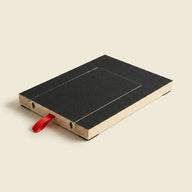
A nail scratch board works on a different principle entirely. Instead of training the dog to tolerate a tool, you train the dog to perform a behavior -- scratching -- that naturally files their nails as a side effect.
There's no clipper approach, no clipper sound, no restraint position. The dog is in control. The nail filing happens as the dog scratches for treats. The anxiety has nothing to latch onto because none of the fear triggers are present.

For dogs with deep clipper fear, this often produces faster results than even a well-executed desensitization protocol. The starting point is "dog sniffs a board" -- not "dog tolerates clippers at all." That's a much more achievable first step for a fearful dog.
The Calm Method is built around this approach. The training sequence goes day by day -- most dogs are actively scratching and filing within 3-7 days of starting. You can see the full method at thecalmmethod.shop/pages/method. If you want to start with the board, it's at thecalmmethod.shop/products/the-calm-method.
Combining Both Approaches
Some owners desensitize to clippers for the occasional nail that needs a precise trim (especially dewclaws), while using the scratch board for regular maintenance of the other nails. This hybrid approach works well: the scratch board handles the anxiety-free routine maintenance, and the clippers are only needed infrequently and for short sessions.
FAQ
Q: How long does desensitization take for a fearful dog? A: For mild resistance: 2-4 weeks. For established fear: 4-8 weeks, sometimes longer. For dogs with a quick-cut history or severe anxiety, the timeline is unpredictable and the scratch board method may be more practical.
Q: My dog is fine for 2-3 nails then suddenly resists. What's happening? A: Stress stacks. Each nail handling slightly elevates arousal, and by nail 3-4, the dog is at their tolerance threshold. Solution: end sessions earlier (2 nails max at first), give a longer reward break between nails, and build endurance slowly. Some dogs also need their handling session to happen after exercise, when their arousal is naturally lower.
Q: Can I desensitize a senior dog? A: Yes. Older dogs learn more slowly but they do learn. Shorter sessions (2-3 minutes vs. 5-10 for younger dogs), higher-value treats, and more patience with progress pace. If the senior dog has years of negative nail history, expect the process to take longer.
Q: What treats work best for nail training? A: The highest-value treat your dog will accept. Most dogs respond well to small pieces of cooked chicken, commercial training treats (small, soft, fast to eat), or squeeze cheese. The treat needs to be delivered within 1-2 seconds of the desired behavior -- timing matters more than the specific treat.
Q: Is it okay to use a muzzle during desensitization? A: A basket muzzle (not a fabric muzzle that restricts panting) is acceptable as a safety measure if the dog has bitten during nail handling. Muzzle the dog using a separate positive-association protocol first -- never put a muzzle on a dog cold and expect it to go well. Desensitize the muzzle before using it in nail training. The goal is still to reach a point where the muzzle isn't needed.
Q: Should I train every day? A: Daily short sessions (3-5 minutes) are more effective than longer sessions a few times a week. Consistent daily exposure at a low-intensity level builds association faster than intense sessions with gaps.
Related posts: Why Is My Dog Scared of Nail Clippers? | Dog Nail Scratch Board: How to Use It Day by Day
Learn more about the training method: thecalmmethod.shop/pages/method
The Calm Method board: thecalmmethod.shop/products/the-calm-method